
My time is running short here in Tanzania and I have already started some planning for the end of my placement which is September 30.
I recently read A Brief History of Time and grasped about 3 % of the concepts about time and space. But one thing I picked up was in “the theory of relativity, there is no unique absolute time but instead, each individual has his own personal measure of time that depends on where he is and how he is moving.” Hawking implies in his twisted logic that in certain conditions, one would be able to remember the future. This idea contradicts traditional African cultures where there is no concept of the future. In the traditional African setting, time is a two-dimensional phenomenon, with a long past, a present and virtually no future. This is because the events in the future have not taken place. What does not exist, cannot be real.
On a very practical level, I am confused regularly about the time of day. Telling time in Swahili is similar to the biblical system. Each new day begins at sunrise, that is 6 AM. There are 12 hours of daylight and 12 hours of darkness. Thus, there’s a difference of six hours between Swahili time in English time. 12 o’clock in English time will be 6 o’clock in Swahili time. This means that 7 AM global time is 1 AM in Tanzania. Some people use Swahili time and some use global time, so I always have to ask which clock we are using. I have been 6 hours late and 6 hours early on some occasions.
Somewhere in-between these disparate concepts, I experience time as it is for me. What seemed like forever when I started – I now have just 3 ½ months. And there is a lot of this country I have yet to see. I will be traveling soon to the south near the Mozambique border for a project and then later to the east near the border of Malawi for travel and hope to go to the north to see Kilimanjaro and visit some archeological sites.
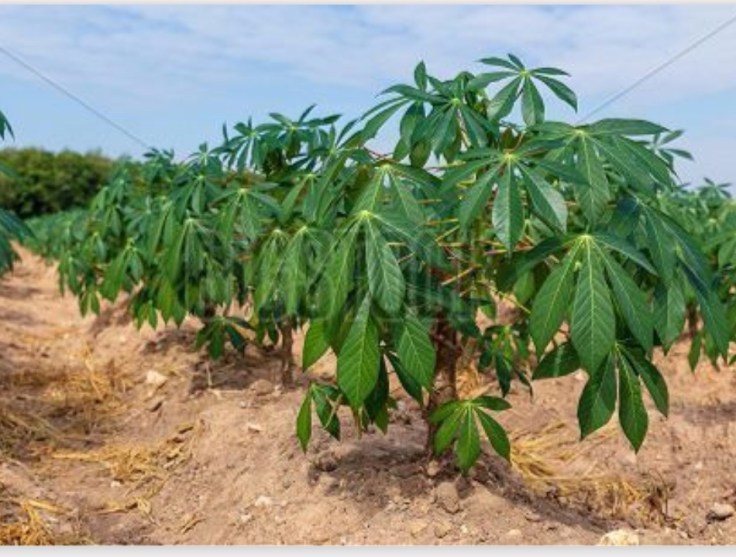
I was able to push through a major funding proposal that we hope will stimulate a value chain for cassava in the western region of the country. The concept is to introduce drying technology to dry fresh cassava. There is a huge demand for premium grade dried cassava in neighboring countries of Rwanda, Burundi, Congo and Uganda where they use for ugali – a daily staple in most meals as well as in bread and to make beer. Small holder farmers traditionally dry their cassava on the ground in the sun and significant rot and mould results meaning they get lower grade prices. We are introducing flash drying technology and new higher yielding varieties of cassava which together would increase farm revenues 10-fold.
Am also following through with a project to improve economic opportunities for fishers. On Lake Victoria, in the north west part of Tanzania and important fishery takes place, Sixty percent of all sardines eaten in Tanzania come from Lake Victoria. Sardines are harvested in small boats and transported to Ghana island where they are piled on a sandy beach and left to dry in in the sun. Up to 50% of total harvest is lost due to inappropriate drying conditions including contamination from contact on the sandy beach. We are proposing the use of large greenhouses with drying racks to eliminate the losses and increase the volume and quality of the end product.

I am happy to report that young Virgillia, mentioned in the last post, delivered a healthy baby girl in early June. She is healthy. Her mother is with her assisting. All good!
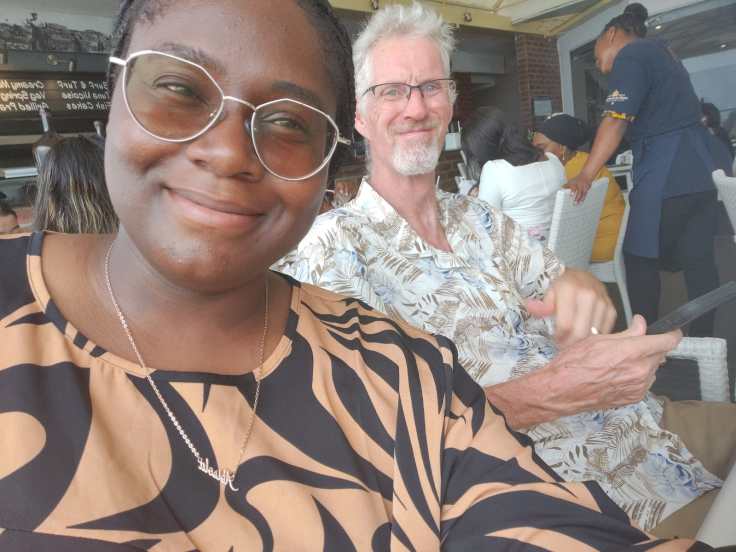
I had been working with Abisola, another CUSO volunteer, for the last 8 months but Abi’s placement ended a week ago and she is now back in Brampton. Abi is an incredibly intelligent, sensitive and caring person whom I miss dearly.





Leave a Reply